Whyteleafe School – Creating a flood-resilient ‘Sponge School’


Overview:
Whyteleafe Primary School suffered dangerous flooding incidents in 2014, 2016, and 2019, which caused significant disruption to learning due to emergency evacuations and subsequent days of pump-out operations.
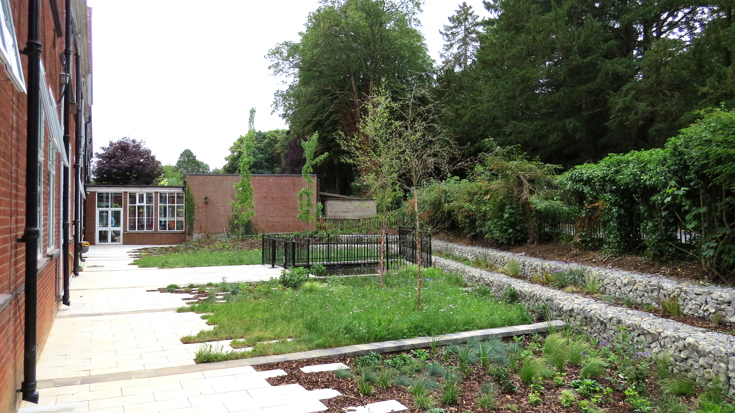
To tackle this, commissioned under the DfE School Flood Resilience Framework, our works designed the transformation of previously under-utilised external spaces with nature-based Sustainable Drainage Systems (SuDS) to create a multi-functional ‘Sponge School’.
Our landscape architects designed a new space that combined features such as rain gardens, bioswales, SuDS planters, an outdoor classroom and learning environment, an accessible sensory garden and therapeutic landscapes. This worked with a large underground attenuation tank, with the revitalised grounds now capturing stormwater with a 233m³ water storage capacity.
Landscape Architecture and Design
- RIBA Work Stages 0 – 7
- Strategic Development to Detailed Design
Scope of Works:
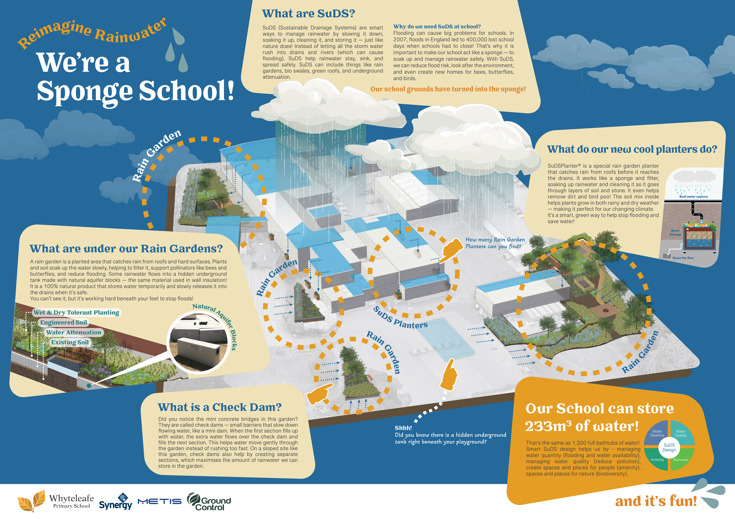
Our design transformed underused school grounds into blue-green infrastructure, integrating rain gardens, bioswales, SuDS planters and underground storage to manage multiple flood risks while enhancing biodiversity.
- Landscape Design | We brought together landscaping expertise and specialist underground works to maximise the constrained site.
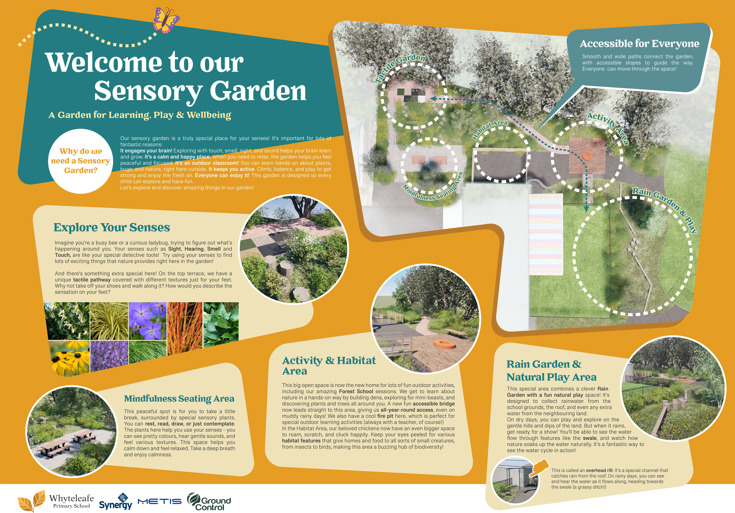
- The Wider Impact: Learning and Play | The design created sensory gardens, a biodiversity pond, forest school areas and accessible outdoor spaces that support education, wellbeing and nature engagement.
- The Wider Impact: Catchment | The design extends beyond the school, capturing, slowing, storing and naturally filtering rainwater to reduce pressure on drainage infrastructure while creating valuable, year-round wildlife habitats.
Landscape Design
Replacing traditional grey infrastructure, the design transforms under-utilised school grounds into interconnected blue-green infrastructure. Rain gardens, bioswales, SuDS planters and a natural underground storage work in seamless concert, perfectly integrating surface and underground systems.
This unique innovation makes stormwater management joyful and educational. A biodiversity pond with a viewing deck, ecological planting and check dams turn the landscape into an interactive learning tool. Once overgrown spaces are now sensory gardens, an outdoor learning and mindfulness space, all underpinned by robust infrastructure.
The design had to overcome a number of key challenges and issues to fulfil the whole brief, including:
- Multi-Source Flood Risk: The school faced simultaneous surface water, groundwater and combined sewer surcharge.
- Above and Below Ground Integration: Civil engineers and landscape architects collaborated to seamlessly integrate belowground infrastructure with planting, landforms, and play features.
- Constrained Site, Maximum Ambition: Every precious square metre of the school grounds was purposefully transformed.
The Wider Impact: A Learning and Play Environment
Beyond flood defence, spaces are multi-use, rain gardens serve as natural play terrain on dry days and live water-cycle demonstrations in wet weather. Forest School sessions, den-building, and fire pit activities use the habitat area year-round, with an accessible bridge over the swale ensuring inclusive access for all pupils. SuDS planters visually demonstrate the water-capture process while supporting year-round planting.
Pupils are actively encouraged outdoors, improving physical and mental health. The restorative landscape area reduces anxiety and the therapeutic garden supports diverse sensory needs.
The Wider Impact: Catchment
Capturing, slowing, storing, and naturally filtering rainwater significantly reduces the school’s impact on the wider drainage catchment. Natural aquifer blocks provide high-capacity and sustainable storage. Wet and dry-tolerant planting supports wild habitat year-round.
The project transforms flood resilience into an opportunity, creating a safer, greener and more inspiring school environment that manages stormwater naturally while enhancing biodiversity, outdoor learning and pupil wellbeing.
Talk to us about our nature based SuDS solutions
Speak to an Expert
Berry Hill Park - A complete park redevelopment for Mansfield District Council

Headstone Manor Recreational Grounds
